***Updated 5/11*** (Sorry Jesse and Clay!)
_________________________________
Tomorrow one of my favorite groups of students ever will take the big step across the stage wearing funny costumes and enter the next phase of their lives. I will miss each and every one of them.
I've had the privilege and honor of teaching every member of this year's Applied Social Science graduating class in at least one course (and sometimes half a dozen different ones), and will be forever grateful to them for bearing with our growing pains (they will be the first class to really go through the program as it was intended and have all been at Stout for as long or longer than the program has been in existence), pushing us to improve, showing us what was possible for our students to achieve, and ultimately, reminding us why we love our jobs.
A few memories I have of each of our graduates (and a few pictures I could scare up)
Applying Social Science @Stout
A blog of items of interest and an unofficial space for discussion for social science students and faculty at the University of Wisconsin-Stout (and anyone else who wants to join us!)
Friday, May 10, 2013
Wednesday, May 1, 2013
Crowd-sourcing everyday decisions
For once I'm going to actually keep it (relatively) short with a blog post. I recently stumbled across this new smartphone app called "Seesaw" which allows you to crowd-source your everyday decisions.
I'm kind of fascinated by this for a couple of reasons, but mostly I'm thinking about it because I spend every day teaching students how to model decision making using economic theory, and I'm realizing that (outside of some game theory and public choice topics) there is very little economic theory that I am teaching them that is capable of modeling this increasing area of decision making in modern societies and economies.
From Kickstarter crowd-sourcing new investment decisions to Facebook polls and Qualtrics surveys, increasingly our decision making is becoming data-driven and crowd-driven. Traditional "cost-benefit analysis" type models are taking a back seat to (what I would generally consider the lazier version of decision making) just asking other people to decide for us.
Friday, April 26, 2013
Memories of a Mama: Joydeb Mukherjee
Inspired, in part, by Nels' recent "Bricolage" homage to his friend Dave Conz, we are blessed with the following guest post today from Dr. Lopa Basu, Director of the Honors College and English Professor at UW-Stout.
_____________________________________
Memories
of a Mama: Joydeb Mukherjee
In Bengali, the term for a maternal uncle is Mama,
phonetically a repetition of Ma the word for mother. From our earliest nursery rhymes, the
intimacy of the place of a maternal uncle’s home is invoked:
Tai Tai Tai
Mamar bari jai
Mamar bari bhari moja
Doi Sandesh Khai
My rough translation:
Clap Clap Clap
We go to our Mama’s house
Mama’s house is a place of great joy
There we eat
curds and sweets !
The place of
the Mama and his home is a place of freedom, a suspension of the rules and
disciplines of everyday school and home life, a place of uninhibited
imagination and play. Today, as I write this, I remember that Mamar Bari and
the Mama who had such a formative influence in my childhood and with whose
death, that figurative place has ceased to exist. As long as my Mama lived, my
childhood was still available to me. Today, I feel the burden of adulthood and
the inability to escape into another world of imagination and play.
Monday, April 22, 2013
Bricolage
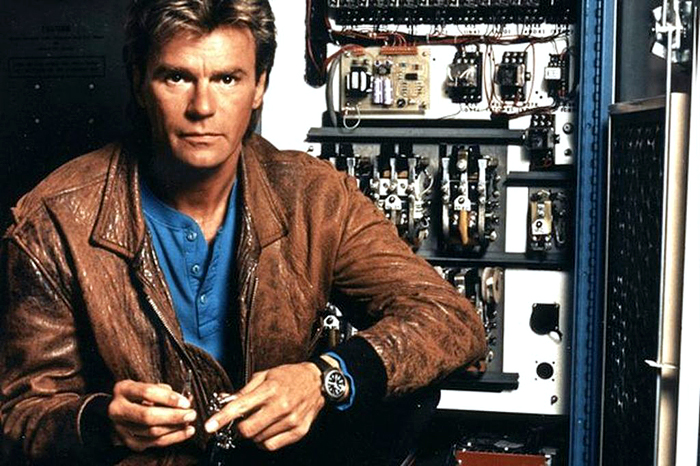
"If you don't have the right equipment for the job, you just have to make it yourself."
–MacGyver

Well, this might be the most difficult blog post for me to write yet. My office-mate from graduate school and one of my closest friends, Dave Conz, died last week. When something like that happens you end up thinking a lot about the person's life and what it meant, to you and to others. Dave offered so much to this world. He had a doctorate in sociology, a master's degree in humanities, and a bachelor's degree in aerospace studies. He was a pilot, a motorcycle mechanic, a hobby farmer, a dancer, a welder, a drummer, a skateboarder. He spoke German. He made biodiesel and beer from scratch. And so much more. Perhaps his biggest contribution intellectually was identifying the constraints and opportunities in modern society to combine a bunch of random ideas and things together to create something extraordinary (per the MacGyver quote above- one of Dave's favorites). In a lot of ways this is what we are trying to do with the Applied Social Science program- getting students to the point where they combine all the random things they learn in a meaningful and consequential way. Sociologists (and others) call this "bricolage", and while there is considerable scholarship on this topic I want to take some time ruminating on it in my own way.
Labels:
Nels Paulson
Tuesday, April 16, 2013
Debt, Growth, and the great Excel debacle of '13
Today news broke about an influential economic study being "de-bunked" on several levels, both due to some selective data decisions and also the sexier headline of a mistaken Excel code. (note, the de-bunked link above is to a more readable summary ... for economists or others in the audience that want to read the original critique, that can be found here)
The particular study in question is about a very important topic, particularly in recent policy debates: the importance of the U.S. debt levels to the overall economy. We have been locked into an endless cycle of debt ceiling debates, in part fueled by the conclusions of this study and so any suggestion that these findings are questionable could (and should) have major implications for how we think about debt and austerity moving forward. The original authors Reinhart and Rogoff (paper here) essentially found (or claimed to find) that countries with high levels of debt (specifically, a debt-to-GDP ratio of 90% or more) suffered from lower economic growth rates. These findings have been widely cited by Paul Ryan and others as evidence that austerity plans to reduce the debt are vitally necessary for the health of the economy. Such claims are now being shown to have been based on some shaky economic foundations.
Thursday, April 11, 2013
Why pick on gender studies?
In another post, my colleague Chris Ferguson made excellent points about the value of higher education that goes beyond very narrow job training while still keeping in mind that education is an investment in the future (but an investment of a particular kind). In that post, he quoted Governor Pat McCrory’s comments about his desire to use public money to fund education that trains people for jobs:
“If you want to take gender studies
that’s fine, go to a private school and take it. But I don’t want to subsidize
that if that’s not going to get someone a job.”
Chris pointed to the fact that gender studies is singled out
but then left it aside hoping that someone would tackle it. So, here is my two cents on that issue.
Labels:
Tina Lee
Monday, April 8, 2013
Rethinking the cost of higher education
I am late getting around to posting this, but if you follow higher education policy at all, quite a bit of attention has paid recently to the latest governor to weigh in on education reform. North Carolina's Gov. Pat McCrory (am I the only one that has trouble pronouncing that name?) has caused quite a stir with his comments regarding the value of liberal education.
One thing you should know about citizens of North Carolina is that they take a lot of pride in their excellent universities and colleges (I'm a proud Wake Forest Alumnus, but I would also grudgingly admit that Duke, UNC-Chapel Hill, Davidson, Elon, NC State, etc are, if not quite as good as Wake, also top notch institutions) and so any remarks disparaging these colleges (or their basketball teams) are likely to draw backlash in the state.
Tuesday, February 5, 2013
Gender, Names, and Fraud Charges
Today in my Gender in Cross-Cultural Perspective class we
were discussing a classic article about gender-based naming practices among
some segments of Chinese society. The
basic point of the article is that names provide important clues to ideas of
personhood which are profoundly gendered.
Men gain and choose for themselves a series of names throughout their
life that continue to mark them as individuals, celebrate milestones and
accomplishments, and demonstrate their ability to use the nuances of their
language in interesting and cleaver ways.
Women, in contrast, are given
names that connect them to hopes for the larger family, that mark them as wives
or mothers, or that reference something from the time they were born. Women have a tendency to lose individualized
names as they age, being referred to sometimes even simply as “old woman.” Our class discussion was very interesting and
we were able to point out some continuity with practices like taking on a
husband’s name at marriage along with the more obvious differences.
Then, one student mentioned a news story that I had somehow
missed about a man in Florida who had his driver’s license revoked because, the
state said, he had committed fraud in obtaining it. The fraud? He had changed his last name to
his wife’s when they were married.
Labels:
Tina Lee
Monday, January 28, 2013
Open for Business
When Governor Walker was elected a few years ago, one of the first things he did (even before some of the more, shall we say, controversial moves) was to commit to supporting business growth in Wisconsin. The slogan "Open for Business" was a key part of the governor's new platform to create 250,000 new jobs. Personally, I'll admit I found it tacky to slap the bumper-sticker like slogan on our beautiful state welcome signs [the best in the Union!], however if we can put that aside for the moment, this sentiment of promoting business growth is typically one of the top responsibilities of any political leader. The question is, how do we best go about doing it?
Labels:
Chris Ferguson
Saturday, January 26, 2013
The utility of the coin flip?

Recently Freakonomics guru Steven Levitt announced a new research project of his on strategic decision making. He argues that when we really cannot make a definitive decision between two things then the only logical choice is to flip a coin. With that he launched a new website that is dedicated to Freakonomics Experiments. You send in your decision that you cannot make, flip a coin, let them know your outcome, and then they check in with you a couple of times in the future to find out how that decision turned out for you. I am really curious what they find out. I think this is fascinating, but perhaps not for the reason Levitt does. I believe it's fascinating because it disregards the role of emotion in that decision, which reflects a problem with the role of emotion for decision making in modern society.
Labels:
Nels Paulson
Subscribe to:
Posts (Atom)