Showing posts with label Chris Ferguson. Show all posts

Wednesday, August 7, 2013

Changing marketplaces and crowdfunding

Image Source: NYTimes Zoe Prinds-Flash

Is there anything we can't crowd-fund these days?  I have a friend who recently raised almost $20K on Kickstarter for his art studio (Baker Prints Kickstarter).  VolumeOne has funded the summer concert series in Eau Claire with a successful WePay campaign of community donations. One of our very own APSS majors has been raising money through IndieGogo to produce a film (still waiting for my personalized song and video shout-out, Roskowski).  It's a fun time to have an idea and need money.

Friday, May 10, 2013

Class of 2013

***Updated 5/11*** (Sorry Jesse and Clay!)
_________________________________
Tomorrow one of my favorite groups of students ever will take the big step across the stage wearing funny costumes and enter the next phase of their lives.  I will miss each and every one of them.

I've had the privilege and honor of teaching every member of this year's Applied Social Science graduating class in at least one course (and sometimes half a dozen different ones), and will be forever grateful to them for bearing with our growing pains (they will be the first class to really go through the program as it was intended and have all been at Stout for as long or longer than the program has been in existence), pushing us to improve, showing us what was possible for our students to achieve, and ultimately, reminding us why we love our jobs.

A few memories I have of each of our graduates (and a few pictures I could scare up)

Wednesday, May 1, 2013

Crowd-sourcing everyday decisions


For once I'm going to actually keep it (relatively) short with a blog post.  I recently stumbled across this new smartphone app called "Seesaw" which allows you to crowd-source your everyday decisions.

I'm kind of fascinated by this for a couple of reasons, but mostly I'm thinking about it because I spend every day teaching students how to model decision making using economic theory, and I'm realizing that (outside of some game theory and public choice topics) there is very little economic theory that I am teaching them that is capable of modeling this increasing area of decision making in modern societies and economies.

From Kickstarter crowd-sourcing new investment decisions to Facebook polls and Qualtrics surveys, increasingly our decision making is becoming data-driven and crowd-driven.  Traditional "cost-benefit analysis" type models are taking a back seat to (what I would generally consider the lazier version of decision making) just asking other people to decide for us.

Tuesday, April 16, 2013

Debt, Growth, and the great Excel debacle of '13

Today news broke about an influential economic study being "de-bunked" on several levels, both due to some selective data decisions and also the sexier headline of a mistaken Excel code. (note, the de-bunked link above is to a more readable summary ... for economists or others in the audience that want to read the original critique, that can be found here)

The particular study in question is about a very important topic, particularly in recent policy debates:  the importance of the U.S. debt levels to the overall economy.  We have been locked into an endless cycle of debt ceiling debates, in part fueled by the conclusions of this study and so any suggestion that these findings are questionable could (and should) have major implications for how we think about debt and austerity moving forward. The original authors Reinhart and Rogoff (paper here) essentially found (or claimed to find) that countries with high levels of debt (specifically, a debt-to-GDP ratio of 90% or more) suffered from lower economic growth rates.  These findings have been widely cited by Paul Ryan and others as evidence that austerity plans to reduce the debt are vitally necessary for the health of the economy.  Such claims are now being shown to have been based on some shaky economic foundations.

Monday, April 8, 2013

Rethinking the cost of higher education


I am late getting around to posting this, but if you follow higher education policy at all, quite a bit of attention has paid recently to the latest governor to weigh in on education reform.  North Carolina's Gov. Pat McCrory (am I the only one that has trouble pronouncing that name?) has caused quite a stir with his comments regarding the value of liberal education.

One thing you should know about citizens of North Carolina is that they take a lot of pride in their excellent universities and colleges (I'm a proud Wake Forest Alumnus, but I would also grudgingly admit that Duke, UNC-Chapel Hill, Davidson, Elon, NC State, etc are, if not quite as good as Wake, also top notch institutions) and so any remarks disparaging these colleges (or their basketball teams) are likely to draw backlash in the state.

Monday, January 28, 2013

Open for Business


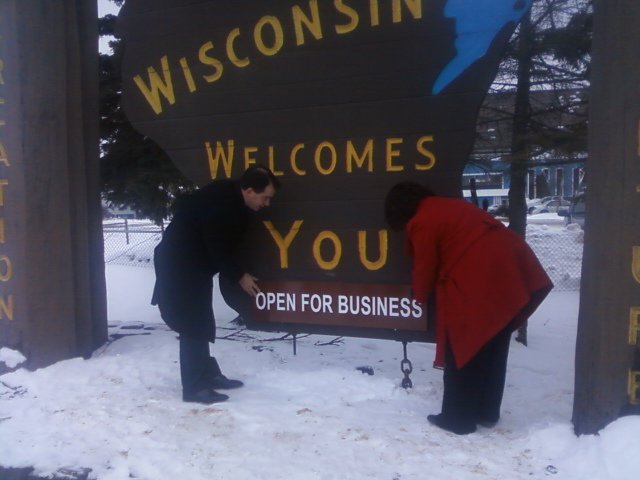
When Governor Walker was elected a few years ago, one of the first things he did (even before some of the more, shall we say, controversial moves) was to commit to supporting business growth in Wisconsin.  The slogan "Open for Business" was a key part of the governor's new platform to create 250,000 new jobs.  Personally, I'll admit I found it tacky to slap the bumper-sticker like slogan on our beautiful state welcome signs [the best in the Union!], however if we can put that aside for the moment, this sentiment of promoting business growth is typically one of the top responsibilities of any political leader.  The question is, how do we best go about doing it?

Sunday, January 13, 2013

Monetizing Trolling?

It seems that Facebook is experimenting with a new business model ... they are quietly rolling out a pilot that will allow you to send a direct message to someone for a fee, whether you are friends with them or not.  The extreme version seems to be $100 bucks to email Mark Zuckerberg.  However, they also seem to be experimenting with a $1 charge to message "regular people."  This is a really interesting economic experiment of the type I get really fascinated by ... how do we put a price on weird stuff?  And what are the consequences of doing it?

Friday, January 11, 2013

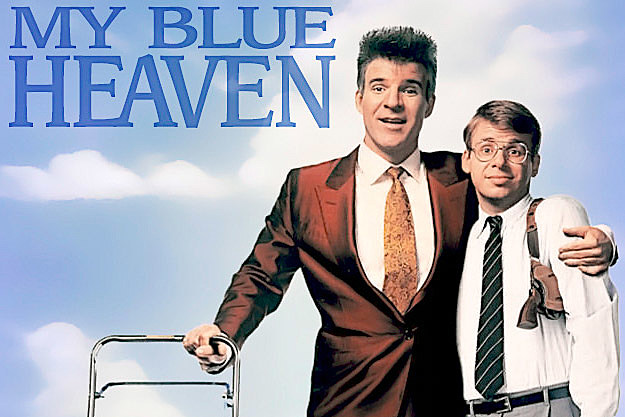
Getting into (Blue) Heaven ... 20% at a time

There has been a proliferation of "Tipping" stories in the news in the last few months, and I thought I'd weigh in on the topic as it's one of those fascinating questions that economists (and social scientists in general) puzzle over that force us to think more carefully about our models of human behavior.  That, and because one of my favorite under-rated movies of all time provides this kernel of wisdom from Steve Martin, aka Vincent Antonelli, aka 'Todd Wilkinson' ...
"It's not tipping I believe in - it's OVER tipping!"
Words to live by.

Thursday, January 10, 2013

Trillion Dollar Coin

It seems that the country (or at least the portion of the country that follows wonky economic policy issues) is getting more and more interested in the possibility of using a "Trillion Dollar Coin" to avert the debt ceiling showdown - an idea first proposed by the Simpsons as a method of WWII recovery aid.  Yes, that's the world we're living in now - perhaps we can use Spider-pig to solve our crime problems for us as well.   For those not following along at all, here are some of the key highlights and a bit of an FAQ on the trillion dollar coin solution:

Monday, December 17, 2012

Actuaries to the rescue? A market-based solution to an externality problem

I promise I'll go back to our regularly scheduled program of topics that are non-gun related soon enough (sneak preview: coming soon will be topics on the economics of the star wars 'death star', state tax subsidies and their effect on business, and an interesting new pricing strategy for drinks in bars), but I ran across a kind of brilliant market-based solution that might bypass some of the trickier gun control issues.  So at least this version of gun control policy is in an area I actually know something about and is more of a standard economic solution to a problem. In a post similarly titled to my earlier post over the weekend, the author presents her son's idea:

Wednesday, December 5, 2012

Game Theory, Externalities, and Vaccinations

One of the problems with having an economist in your family is that, no matter how hard you try to fight against it, you get sucked into looking for interesting questions about human behavior.  Such is the burden that my wife bears.

Yesterday, our son had his one-year old round of vaccinations at the doctor's office which sparked a question from my wife, Katie.  But first, a little more background:

Monday, December 3, 2012

Internet governance, international trade, and the future of the web


Today in Dubai a meeting will be held that may, in part, shape the direction of the internet in the future.  While we all take for granted now that it's just "there," in actuality the protocols and standards for the internet are governed and directed by policymakers in the U.S. and around the world. 

This article in the Economist lays out the situation quite well:

"THE rules of the internet decide its speed, safety, accessibility, flexibility and unity. They therefore matter not just to computer enthusiasts, but to everyone with a stake in the modern world. On December 3rd officials from more than 150 countries, plus do-gooders, geeks and other interested parties, will meet in Dubai to argue about how to run the network—and fight over who should control it.

Since the internet’s creation, a ragtag bunch of academics, engineers, firms and non-profit outfits have been in charge. That delights innovators but has been a nightmare for the tidy-minded, and especially for authoritarian governments. They would like the net to be run like the world’s telephone system, with tight standards and clearly set charges. The Dubai meeting brings the chance to write new rules, with a review of an elderly treaty: the International Telecommunication Regulations."

Monday, November 19, 2012

Twinkies, Pizza, Health Care, Hockey, and Black Friday Economics

There has been no more divisive topic in Wisconsin over the last two years than the words "union" and "collective bargaining," which made me hesitant to write this post.  However, over the last few weeks there have been some really interesting economic events in the news surrounding labor issues.  Besides that, we are about to start a unit on monopoly in my principles of microeconomics class and a bargaining unit in my game theory class, so these topics are of particular relevance to my students right now.  Thus, I'm going to attempt to do the impossible: write a fairly balanced, informative post on labor issues that presents some interesting questions for discussion.  You can let me know whether I succeeded.

Friday, November 16, 2012

Data Visualization

As students are churning toward the end of the semester, many are starting to get to the point where they are thinking about how to present the results of projects they've been researching for the last few months.  I thought this would be a good time to highlight another growing trend (and career path) in social science: creative data visualization.

Thursday, November 15, 2012

Carbon ranching

Externalities and market failure have been on my mind lately - partly because we just finished that unit in my intro econ class, partly because I'm a public economist and that's a good chunk of what we spend our time thinking about, and partly because I've been reading a lot about California's new greenhouse gas emissions permits which went into place yesterday.

Wednesday, November 7, 2012

The economics of campaign finance

So you're an applied social science student and are interested in advocating for issues you believe in, but you want a high paying job?  Here's a career path for you:  Political consulting.

One of the stories that comes out towards the end or shortly after every campaign season is always about the amount of spending done leading up to the election.  (See a really good summary graphic from the NY Times here, or a more detailed set of facts from a watchdog group on campaign spending here)

This was the first true post-Citizen's United election season and the result is an estimated $6 Billion spent on elections in the U.S. this year.  Where does that money go? (and how can you pocket a chunk of that sweet, sweet cash for yourself? you might be asking)

Sunday, November 4, 2012

Chili Parlors, Community, and Geography

This weekend I made my son Cincinnati Chili for the first time.  If you've never heard of Cincy chili, wikipedia has a pretty good brief summary or if you're up for something a little more complete, here is an ethnographic - type study of chili and it's importance in Cincinnati culture: The Story of Cincinnati Chili.  From the picture above, you can see that he is perhaps a little young still but I wanted to get it into his blood as soon as possible, and it was a pretty big hit.  (FYI: the peas were a concession to healthiness because he's a baby and not a sanctioned ingredient).

Over the course of the meal, my wife and I got to talking about regional foods and their importance to the quality of life in a particular place.  We've lived in a number of places and visited lots of others and one of the things that makes us really enjoy being someplace is a sense of culinary identity.  Wisconsin has beer and cheese and brats among other things (some of you might be surprised to know that cheese curds are completely foreign food in much of the country).  Cincinnati has chili and a few other things like Goetta.   Maryland where my wife is from has blue crabs from the Chesapeake Bay.  When we lived in North Carolina, we had Carolina barbeque and also some really great chicken and biscuit places tightly packed around Winston-Salem.  I've spent a lot of time in Chicago and one of my favorite things to get there is an Italian Beef sandwich.  Coastal South Carolina and Georgia have "low-country" cuisine, and don't even get me started on New Orleans and the mouthwatering bounty associated with that region.

Wednesday, October 31, 2012

Halloween: Social Contract?


One thing you should know about the Ferguson household is that my wife is a notorious Halloween Grinch.  She's always grumpy on Halloween and has no interest in decorations, costumes, or most importantly ... handing out candy.

The role of government

A funny thing has happened on the way to an election that seems to have largely become a direct referendum on the role and size of government more than any specific policies - we got reminded just how much we all depend on government in a crisis and of the power and necessity of collective action and risk pooling.  Personal Responsibility and Job Creators can only carry us so far when mother nature decides to decimate everything in her path, it seems. 

Monday, October 22, 2012

Bob Schieffer's Mom

Another debate season ends with one of my favorite American traditions: Bob Schieffer quoting his mom: "Go Vote.  It makes you feel big and strong"

I know it's cheesy, but it's also very true.

On a related note, if any students are looking for a fun and interesting 21st century election year research topic ... We heard a lot in the last election about it being the first "social media" election with Twitter and Facebook just beginning to gain importance in fund raising and advertising - I think I would dub this the first "meme" election.  Somewhere in pages and pages of The Google there is a really interesting research paper that would also be an excuse to look cheezburger cats with "binders full of women"and Lord of the Rings characters decrying their lack of "horses and bayonets."  Semiotics project anyone?